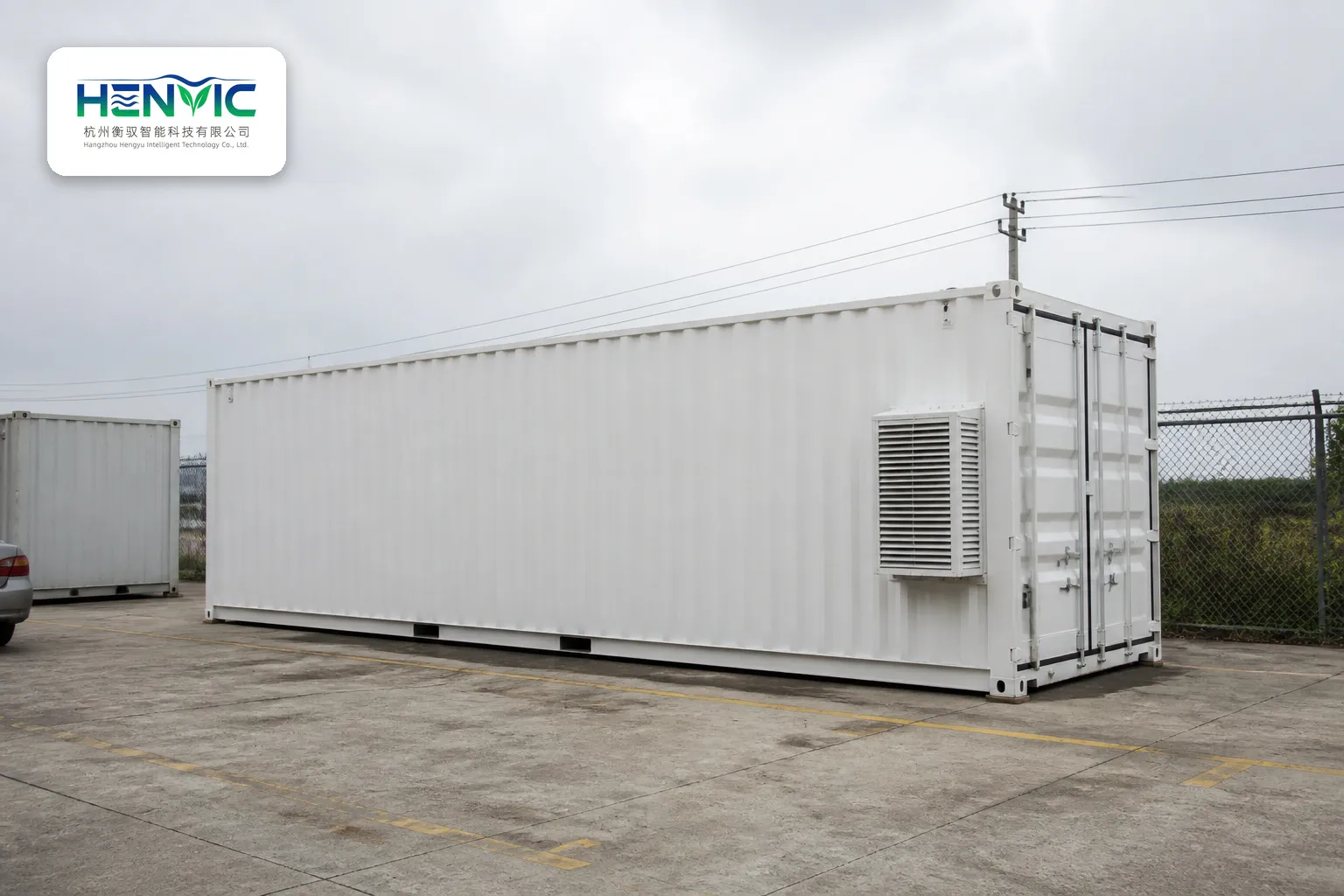
A mushroom cultivation pod — a shipping container, insulated module, or purpose-built chamber configured for fungal fruiting — occupies a peculiar position in the controlled-environment-agriculture family. It is the one major crop category where light is nearly irrelevant to yield, the "crop" is the fruiting body of an organism that has already colonised its substrate, and the critical process variable is not photons but the gas composition and vapour-pressure deficit of a very humid, heavily respiring environment. A mushroom pod is therefore less a farm and more a staged biological process vessel: the substrate is prepared elsewhere (or in a separate zone), pasteurised to eliminate competitors rather than to sterilise, inoculated, allowed to colonise under one set of conditions, and then shifted to a different set of conditions to force fruiting. Each of those stages has its own temperature, humidity, CO₂ and fresh-air targets, and they are mutually hostile. The engineering problem of a mushroom pod is organising those incompatible microclimates in a volume roughly 12 m long and 2.35 m wide, while keeping the contamination pressure low enough that a competitor mould does not outcompete the crop.
This article sets out the species requirements, the systems that deliver them, the layout that separates them, and the operational disciplines that decide whether the unit produces mushrooms or compost.
1. Why the Container Format Fits Fungi Unusually Well
The case for growing mushrooms in a container is stronger than for most other container crops, for four structural reasons.
No photosynthesis means no lighting load. The single largest capital and operating cost in a leafy-green container — the LED array and its 10–20 kW of connected load, plus the latent heat of the transpiration it drives — simply disappears. A mushroom pod's electrical budget is dominated by refrigeration, fans, and humidification, which for a given volume is a much smaller number. This is the most consequential difference and it is why mushroom pods frequently pencil out where salad containers do not.
Containment is a genuine functional requirement, not a marketing claim. Mushroom cultivation is a competition between the crop fungus and a large field of competitor organisms — Trichoderma, Penicillium, Aspergillus, Neurospora, coprinoid "ink cap" mushrooms, and bacterial blotch organisms. A sealed, HEPA-filtered, positive-pressure envelope with controlled airflow is the mechanism by which the grower excludes those competitors. In this application the container's enclosure is the technology, and a greenhouse or a shed cannot substitute for it.
The crop is highly environment-sensitive and therefore highly responsive to control. Yield, morphology, colour and market grade in mushrooms are set by the interaction of temperature, CO₂, humidity and air movement to a degree that few plant crops match. King oyster stipes stretch or thicken; enoki develop long pale stems or short dark ones; lion's mane forms dense pom-poms or open branching; oyster mushrooms develop long spindly stems and small caps under high CO₂. Controlling that interaction precisely is the entire value proposition.
Cycle time is short and the product is perishable. Most specialty mushrooms move from substrate to harvest in 3–6 weeks, with a fruiting flush occupying only 5–14 days of that. Combined with a shelf life measured in days, this means the container's proximity and scheduling advantages translate directly into freshness and reduced loss.
2. Species Matter More Than in Any Other Container Crop
The most common operational error in mushroom pods is attempting to grow several species in one chamber. The requirements below show why this fails.
Species
Spawn-run temp
Fruiting temp
RH at fruiting
CO₂ at fruiting
Light need
Notes
Agaricus bisporus(button/cremini/portobello)
22–25 °C in compost
15–18 °C
85–90 %
600–1,200 ppm
None (dark)
Requires composted substrate, casing layer, two or three climate zones
Pleurotus ostreatus (oyster)
24–28 °C
15–20 °C
85–92 %
<700 ppm (very CO₂-sensitive)
100–500 lx indirect
Fast, forgiving, the workhorse of small operations
Pleurotus eryngii (king oyster)
22–25 °C
14–18 °C
85–90 %
500–1,000 ppm
Low
CO₂ manipulated to thicken stipe
Lentinula edodes (shiitake)
22–26 °C
15–22 °C
85–90 %
600–1,000 ppm
Moderate (triggers fruiting)
Needs brown-colonised, "barked" blocks; cold-shock or soak to initiate
Hericium erinaceus (lion's mane)
22–25 °C
18–22 °C
85–95 %
500–800 ppm
Low
CO₂ above ~1,000 ppm causes branching instead of dense pom-poms
Flammulina filiformis(enoki)
20–24 °C
5–10 °C
80–90 %
2,000–4,000 ppm during stem elongation, then lower
Very low
Cold and high CO₂ produce the long pale stipe; the classic "bottle culture" species
Hypsizygus marmoreus(shimeji, brown/white)
22–26 °C
14–17 °C
85–90 %
500–1,000 ppm
Low
Long cycle, premium price, sensitive to disturbance
Grifola frondosa (maitake)
22–26 °C
15–20 °C
85–92 %
<800 ppm
Low
Long maturation, difficult and high-value
Agrocybe aegerita(pioppino)
24–27 °C
16–20 °C
85–90 %
500–800 ppm
Low
Strong pinsetting response to fresh air
Pleurotus citrinopileatus(golden oyster)
24–28 °C
21–25 °C
85–92 %
<700 ppm
Low
Warmest-fruiting of the commercial oysters
Two consequences follow immediately from this table. First, the fruiting temperatures span from 5 °C (enoki) to 25 °C (golden oyster) — a range that no single refrigeration setpoint can serve. A multi-species operation therefore needs independently controlled chambers, which is why serious container installations are usually multi-pod, not one pod. Second, the input variables are coupled in opposite directions for different species.Enoki is cultivated under high CO₂ to achieve its signature long stem, while oyster and lion's mane require low CO₂ to avoid the same morphological distortion. A single air-handling strategy cannot serve both; the control system must be recipe-driven per chamber, not global.
The practical implication for a single-container operation is to specialise. A pod configured for oyster mushrooms can be reconfigured for king oyster or pioppino with modest tuning; it cannot economically be reconfigured for button mushrooms, which need composted substrate, a casing layer, and three distinct climate phases including a pasteurisation-capable room.
3. The Governing Constraints: Gas, Vapour, and Heat
In a plant container, temperature and light are the primary levers. In a mushroom pod the hierarchy inverts.
CO₂ is the master variable. Mushroom mycelium and fruiting bodies respire vigorously; a sealed chamber with a colonising block will accumulate CO₂ rapidly. Fruiting bodies themselves are the most CO₂-sensitive stage, and the sensitivity is morphological rather than lethal:
• Elevated CO₂ suppresses cap expansion relative to stipe elongation, producing long-stemmed, small-capped mushrooms — desirable in enoki, disqualifying in oyster.
• Above roughly 1,000 ppm, oyster mushrooms develop coralloid (branching, non-fruiting) growth and lion's mane loses its compact form.
• Above 2,000–3,000 ppm, pinning is inhibited across most species.
The control target for most fruiting chambers is therefore a CO₂ ceiling in the 600–1,000 ppm band held by continuous fresh-air exchange, which brings with it a large latent and sensible load. Fresh-air exchange and humidity control are in direct conflict: bringing in dry outside air to flush CO₂ removes the moisture the crop requires. Resolving that conflict — by tempering and humidifying the incoming air, by using a heat-recovery or enthalpy exchanger, or by recirculating with a scrubbing stage — is the central air-handling problem of the pod.
Humidity must be held very high, close to saturation. Fruiting bodies are roughly 90 % water, have no waxy cuticle to restrict evaporation, and lose market quality the moment they dry. Targets of 85–95 % RH are standard, and the practical control variable is vapour-pressure deficit (VPD) rather than RH alone, because VPD responds to temperature as well as absolute moisture. In a chilled chamber, a VPD of roughly 0.15–0.35 kPa is the working band for most species. The design consequence is that humidification must be a controlled, metered process — ultrasonic fogging, pressurised water atomisation, or steam, depending on stage and species — not a pan of water on a floor, and every cold surface becomes a condensation risk that can drip bacterial blotch organisms onto the crop.
Temperature must be staged, and the transition is the trigger. Most cultivated mushrooms fruit in response to a temperature drop (a "cold shock") combined with fresh air and, in some species, light or mechanical disturbance. A pod therefore needs the capability to hold spawn-run temperature (typically 22–28 °C) for two to four weeks, then step down to fruiting temperature over 12–48 hours, then hold the fruiting setpoint with tight tolerance. The refrigeration system must have the turndown to hold a setpoint accurately at low load — a condition in which ordinary comfort AC equipment cycles badly and produces unacceptable swings.
Respiration makes the crop a heat source. Like germinating seed, a colonising block and a fruiting flush generate metabolic heat, and in a densely loaded chamber the heat release is substantial. It must be removed by airflow through the room rather than around the blocks. This is the same lesson as in sprout production: the airflow path must be designed through the crop mass, and the refrigeration load must be sized on total heat — metabolic, lighting (if any), fan energy, and envelope transmission — not on air volume alone.
4. Zoning: Separating Process Steps
A functioning mushroom pod is not a single room. It is a sequence of zones that differ in cleanliness status, climate and function. The UNESCO-recognised two-zone and three-zone classical systems developed for Agaricus formalise this logic, and the container version adapts it.
Zone A — Substrate preparation and pasteurisation. Raw materials (straw, sawdust, cottonseed hulls, corncobs, wood chips), mixing, moisture adjustment, and the heat treatment that renders the substrate selective for the crop fungus. This is the dirtiest, wettest and most odorous zone, and it also generates steam and heat. It must be physically separated from spawn run and fruiting with a wall and, ideally, a negative pressure differential, because the airborne spore load generated here is exactly the contamination threat to the fruiting rooms.
Zone B — Inoculation and spawn run. Clean, but not sterile. Substrate is cooled, mixed with spawn (usually grain or sawdust spawn) under reasonably clean conditions, and packed into bags, bottles or blocks. It is then incubated at spawn-run temperature for 14–30 days in near-dark or complete darkness until the substrate is fully colonised and white. This zone needs its own temperature control, minimal airflow disturbance, and a high cleanliness standard — often with HEPA-filtered make-up air and positive pressure relative to Zone A.
Zone C — Fruiting chamber. The coldest, freshest, most humid zone. Colonised blocks are moved here, the climate is stepped down, fresh air is introduced to hold CO₂ down, and pins emerge within days. This is where the layout must optimise for uniform airflow through the crop and for harvest access.
Zone D — Harvest, packing and cold holding. A clean zone where mushrooms are cut or twisted off, graded, trimmed, and packed. Mushrooms are chilled and highly perishable; the target hold temperature is 2–4 °C, which is incompatible with the fruiting zone and mandates separate insulated holding — either a partition at one end of the pod or a separate cold-store module.
The flow is one-way from dirty to clean. In a 2.35 m wide container this is a genuine constraint, and it is why the more competent builds use either a multi-room pod or a two-pod arrangement (one substrate/spawn-run unit plus one fruiting unit), rather than trying to fit all four zones in one shell.
5. Substrate: The Real Production Process
In mushroom cultivation the substrate is not a growth medium in the hydroponic sense — it is the food supply the fungus digests, and its preparation is often more technically demanding than the climate control that follows.
Formulation. The base is a lignocellulosic material: wheat or rice straw, hardwood sawdust (oak, beech, poplar and similar; softwoods are generally avoided because of terpene inhibition), cottonseed hulls, corncobs, sugarcane bagasse, coffee grounds, or spent mushroom substrate. Supplementation with nitrogen sources — wheat bran, rice bran, soybean meal, cottonseed meal — raises biological efficiency but simultaneously raises the contamination risk, since the same supplements feed Trichoderma. Higher supplementation is a trade, not a free improvement, and the optimal level in a low-tech facility is much lower than in a fully controlled one.
Moisture content is typically 60–70 % for bag or block cultivation, adjusted to the point where a squeezed handful holds together and a few drops emerge but does not stream.
Heat treatment. Three options exist, with sharply different implications:
• Composting (Agaricus only). A multi-week thermophilic process in which microbial activity drives the pile to 55–65 °C, converting ammonia and making the material selective for Agaricus. In a container context this is normally done outside the pod, because the outdoor or dedicated bunker phase produces odour, leachate and steam at a scale incompatible with the pod's envelope.
• Pasteurisation. A milder 60–75 °C treatment for several hours, which kills competitor spores and most vegetative pathogens without degrading the substrate's nutritional value. This is the standard for oyster and shiitake cultivation at commercial scale.
• Sterilisation. Autoclaving at 121 °C for 60–120 minutes, used for supplemented substrates and for species that are weak competitors (Hericium, Hypsizygus, Grifola, and most medicinal species). Sterilisation kills everything, including the beneficial organisms, so it must be followed by clean-room inoculation — the substrate is now a sterile, nutrient-rich medium and is highly vulnerable to any contamination introduced during handling.
The consequence for the pod design is that heat treatment capacity determines production capacity, and the treatment vessel (pasteurisation tunnel, autoclave, or retort) is typically the largest single item of capital equipment. In many container operations this stage is deliberately located outside the pod, either in a purpose-built shed or outsourced to a substrate supplier who delivers pre-processed blocks — a legitimate and often rational choice, since substrate preparation is bulk, wet, cheap and heavy, and the pod's advantage lies in the climate-controlled stages that follow.
Bags, bottles and blocks. The container format in Asia is dominated by the bottle system — rigid polypropylene bottles of roughly 800–1,100 mL filled with supplemented sawdust, sterilised, inoculated through the cap, incubated, fruited through an opened neck, and then mechanically emptied, washed and refilled. It is highly automatable and yields consistent, clean fruit bodies; enoki, shimeji and king oyster are almost all grown this way. The bag system dominates Western and small-scale production: polypropylene or polythene bags of 2–10 kg substrate, often with filter patches, sterilised and inoculated through a collared neck or lateral holes. Bags are cheaper and simpler but far more labour-intensive and far less automatable.
6. Climate Engineering Inside the Pod
Temperature. The refrigeration design must deliver: a spawn-run hold at 22–28 °C with low load, a controlled ramp down (typically 0.5–2 °C per hour, not a step change), a fruiting hold with ±0.5–1 °C tolerance, and a multi-species capability if the operation grows more than one type. The usual equipment is a ducted split or packaged chiller with an evaporator coil designed for high latent capacity. Ordinary comfort AC units are a recurring failure: their coils and controls are tuned for sensible load in dry air, so in a 90 % RH chamber they either over-cool or fail to dehumidify predictably, and they ice.
Humidity. Humidification is normally delivered by ultrasonic foggers, high-pressure atomising nozzles, or steam injection. Each has a signature problem: ultrasonic foggers leave mineral deposits on the crop and the chamber surfaces if the water is not demineralised and can raise the air temperature slightly; pressurised nozzles require filtration and drainage to prevent nozzle clogging and wet spots; steam adds heat that the refrigeration must then remove, which raises energy cost but gives very fine control. For most pod applications the practical answer is a filtered atomising system with demineralised or RO water, plus a humidity sensor array rather than a single point of measurement.
Fresh air and CO₂. The hybrid ventilation strategy is essential. A small continuous fresh-air bleed plus a CO₂-controlled override holds the gas composition inside the target band; a full air change is not necessary and is actively harmful in a saturated chamber. The incoming air must be tempered (pre-cooled or pre-heated, depending on season) and humidified to the chamber's setpoint before it enters, or the airflow path will create cold, dry pockets and condensation elsewhere. Some operations use heat-recovery or enthalpy wheels to reduce the load; the trade-off is cross-contamination risk between the exhaust and the supply, which in a mushroom facility is a genuine concern given the spore load in exhaust air.
Air distribution. The standard pattern is a supply plenum or ducted array delivering air low along one side, with a return on the opposite side, so that flow sweeps the crop. Fan selection should aim for gentle, laminar movement in the range of 0.1–0.5 m/s at the crop surface for most species. Direct high-velocity air on fruiting bodies causes desiccation, browning, and "windburn", which is why high-speed fans designed for plant canopies are misapplied here.
Lighting, where it is needed. Most cultivated mushrooms do not require light for yield, but several require a light signal for normal development, and several benefit from modest illumination for morphology and harvest visibility. The practical targets are low: 50–500 lx of cool white or blue-biased light, applied during the fruiting phase, with a photoperiod of 8–12 hours. Light is a morphogenetic signal in Lentinula, Pleurotus, Hypsizygusand Flammulina — used to trigger and orient pinsetting and to promote normal cap and pigment development. Enoki is deliberately grown under minimal light to suppress pigmentation, and the classical enoki bottle system uses a very dim, controlled illumination. The critical equipment point is that mushroom lighting requires no high-PPFD fixtures; low-output, moisture-rated, sealed LED strips in cool white or a blue-dominant spectrum suffice, and the capital cost is a small fraction of what a leafy-green pod requires.
Moisture and condensation management. With the chamber at 90 % RH and the coil and cold lines below dew point, condensation is inevitable and must be captured rather than allowed to fall onto the crop. Key measures: cold-line insulation everywhere; coil housing design that drains to a collection point rather than dripping into the room; a condensate pump-out path; keeping the chamber's surfaces as warm as possible relative to the air; and deliberately managing the small temperature difference between the walls and the air so that condensation forms on designated surfaces. Dripping onto fruiting bodies is a direct bacterial blotch vector (Pseudomonas tolaasii) and a common cause of brown, slimy lesions on caps.
7. Contamination Control: The Discipline That Decides Outcomes
In a plant container, a fungal disease costs yield. In a mushroom pod, a competitor mould can end a batch within days and, if it sporulates, seed the whole facility. This is why mushroom cultivation is closer in culture to a fermentation process than to horticulture.
The principal threats and their controls:
Green mould (Trichoderma harzianum and relatives). The most important competitor in sawdust and supplemented substrates. It proliferates in partially sterilised substrate, in wet or anaerobic pockets, and wherever spawn run is slow or uneven. Control rests on complete heat treatment, clean inoculation, adequate spawn rate (typically 2–5 % by wet weight for grain spawn, higher for sawdust spawn), correct moisture, and rapid colonisation. Once green conidia are visible, the block is lost — and the conidia become airborne, so removal must be done without distributing them.
Bacterial blotch (Pseudomonas tolaasii). A fruiting-body disease that produces brown, sunken lesions on caps, driven by free water on the surface and high temperature. Control is environmental — preventing condensation on caps, holding temperature low and airflow adequate, and avoiding the drips described earlier — plus strict hygiene of harvest equipment, crates and operators' hands.
Cobweb (Cladobotryum), wet bubble (Mycogone), dry bubble (Verticillium). Secondary pathogens that spread via equipment and spores. Their management is essentially sanitation protocol: foot dips, crate sanitisation, restricted movement between zones, and prompt removal of affected blocks.
Anaerobic contamination and off-odours. Wet, compacted substrate, over-filled bags without adequate gas exchange, and waterlogged bottoms produce bacterial slime and sour odours. This is a substrate-engineering failure — filter patch size, packing density, and drainage geometry in the bag or bottle.
Insect pests. Sciarid and phorid flies (Lycoriella, Megaselia) breed in wet substrate and can carry mites and Trichoderma; mites (Tyrophagus) feed on mycelium and spread contaminants. Controls are insect-proof screening on all air inlets, sealed penetrations, sticky traps for monitoring, and — critically — a culture of not leaving open, wet substrate exposed anywhere.
The pod's engineering response to all of this is a set of architectural features: HEPA filtration on make-up air, positive pressure in clean zones and negative pressure in dirty ones, sealed and smooth surfaces that can be wiped down, a drain system that does not permit aerosol backflow, moisture-rated and washable electrical fittings, and airlocks or vestibules at the transitions. In a container this is achievable, provided the design starts from the contamination logic rather than from a generic grow-box template.
8. Stage-by-Stage Operating Protocol in a Pod
A working cycle, in summary form, so the climate requirements can be seen as a sequence rather than a snapshot.
Stage
Duration
Temperature
RH
CO₂
Light
Substrate prep and heat treatment
1–4 h (pasteurisation) to 2 h (sterilisation)
60–75 °C or 121 °C
Saturated
—
None
Cooling
8–24 h
Down to 25–30 °C
High
—
None
Inoculation
1–2 h
Ambient, clean
Moderate
—
None
Spawn run / colonisation
14–30 days
22–28 °C (species-specific)
70–90 % (do not wet the substrate)
Elevated, tolerated
None or darkness
Cold shock / initiation
12–48 h
Drop to fruiting setpoint
85–95 %
Lower; increase fresh air
Trigger where required
Pinning
3–7 days
Fruiting setpoint ±1 °C
90–95 %
600–1,000 ppm
Low, per species
Fruiting / development
5–14 days
Fruiting setpoint ±1 °C
85–92 %
Held in band; species-critical
Low, 8–12 h
Harvest
1–3 days (per flush)
Chilled hold 2–4 °C
Low in holding, high in chamber
—
For cutting
Rest and second flush
7–14 days
Back to fruiting setpoint
85–90 %
—
Same cycle
Cleanout and reload
4–24 h
—
—
—
—
Two things this timeline reveals. First, the fruiting phase occupies a minority of the cycle — most of the residence time is spawn run, during which the chamber is at a different temperature and a much lower airflow. A pod that is climate-optimised for fruiting will be wrong for spawn run, and vice versa. Second, most species yield two to four flushes from the same block, with declining yield per flush. The scheduling problem is therefore not "how many blocks fit" but "how many flushes are economical against the opportunity cost of the space."
9. Harvest, Post-Harvest and Cold Chain
Mushrooms are harvested by hand, by grasping the base of the cluster and twisting, or by cutting with a clean blade. The choice matters for shelf life: cutting leaves a stump that can decay, while twisting can damage the substrate surface. In bottle culture the whole cluster is extracted from the bottle neck, resulting in the uniformly shaped presentation the market expects.
Post-harvest handling in a pod has three priorities.
Rapid cooling. Fresh mushrooms respire quickly and generate heat after harvest. The target is to bring the product down to 2–4 °C within a few hours. This is a separate refrigerated space, not the fruiting chamber.
Preventing water loss and bruising. Mushrooms lose moisture readily once harvested, so holding conditions are high-humidity cold storage, often with a light perforated liner or micro-perforated film, depending on the market. Bruising is a major cause of downgrading in oyster and lion's mane, so handling must be minimal.
Packaging and shelf life. Fresh mushrooms are typically packaged in 200–500 g punnets with micro-perforated film to control transpiration and limit CO₂ accumulation without anaerobic conditions. Wholesale and food-service channels often receive 2–5 kg bulk packs. Shelf life is 5–10 days chilled for most species, shorter for enoki in poor handling and longer where MAP is used skilfully. The container's proximity advantage is realised only if the cold chain from harvest to customer is short and unbroken; a pod producing excellent mushrooms and then stack-cooling them overnight has thrown away most of its advantage.
10. Automation and Labour
Mushroom production is labour-intensive in ways that the technology narrative often obscures. Seeding, filling, harvesting, grading and cleaning dominate operating cost, and in bag culture the handling burden is severe.
The bottle system is the automation benchmark. Filling, sterilisation, inoculation through the cap, incubation in stacks, fruiting in shelves, mechanical extraction of the fruit bodies, and washing and refilling of the bottles can all be mechanised, and the resulting facilities are closer to a modern brewery than to a farm. A container-scale operation cannot approach that capital intensity, but it can adopt the same principles: treat the container unit (bottle, bag, block) as the unit of manipulation rather than the plant; use shelves and trolleys that index to a fixed position; keep the fruiting geometry uniform so harvest is a single motion; and design the cleanout as a parallel operation.
Realistic automation for a pod includes environmental control with recipe management, automated humidification and ventilation, harvest assistance through mobile lighting and trolleys, and mechanical removal of spent substrate. Selective robotic harvesting of mushrooms remains difficult because the fruit bodies are irregular, attached in clusters, and easily damaged; vision-based picking is commercially deployed in some high-value facilities but does not transfer easily to a low-capital container operation.
11. Where Mushroom Pods Fail
The recurring failure modes, ranked roughly by how often they terminate an operation.
Contamination runaway. Green mould in the spawn-run zone that spreads through the facility, or bacterial blotch recurring in the fruiting chamber. Root causes: inadequate heat treatment, wet substrate, poor inoculation hygiene, a drip onto caps, or an unsealed penetration admitting flies and spores.
Climate instability. A refrigeration system with insufficient turndown, or a humidification system that cycles on and off, producing swings in temperature and VPD that lower-grade or abort the crop. This is the most common technical failure and is nearly always a specification error rather than an equipment defect.
CO₂ control failure. Too little fresh air producing long-stemmed, small-capped fruit and, in severe cases, coralloid growth or failed pinning. This is diagnosed as a "bad strain" far more often than as the ventilation problem it actually is.
Single-species rigidity. Building one chamber and discovering that the market wants several species, or that the planned species does not fruit reliably in the available temperature band. Because fruiting temperatures span 5–25 °C, this error is expensive to correct retroactively.
Height and access. Multi-tier shelving loaded with 10–15 kg substrate blocks produces a lifting and reaching burden that accumulates into injury, and the container's 2.35 m width leaves little room for trolleys. Access design is routinely under-considered.
Cold-chain linkage failure. Excellent production followed by poor cooling, packing and transport. Mushrooms degrade in hours; the pod's investment is wasted if the last 10 km is not refrigerated.
Substrate supply dependence. A pod produces fruit bodies; it does not produce substrate at scale. Operations that assume they can make substrate on-site in parallel with cultivation frequently find that the pasteurisation or sterilisation capacity, the space, the water, and the waste handling are all more burdensome than the growing itself.
12. Economics and Positioning
The favourable side of the ledger is real and is the reason the format is expanding. There is no lighting capital or load. Cycle times are short. The product is highly perishable and locally supplied, so proximity carries a genuine premium. Specialty species — lion's mane, king oyster, maitake, shimeji, golden oyster — command prices far above commodity button mushrooms, and demand for functional and culinary specialty mushrooms has grown steadily on the basis of both culinary interest and the nutraceutical claims attached to compounds such as hericenones, erinacines and beta-glucans. A container pod can serve a niche of chefs, specialty retailers and direct-to-consumer channels with a product that travels poorly and therefore has limited competition from distant producers.
The unfavourable side is equally real. Labour intensity is high and difficult to automate at container scale. Substrate preparation, if done in-house, requires capital and space disproportionate to the growing volume. Contamination risk is systemic rather than incidental — one bad substrate batch can lose a month of production. The energy load, while lower than a leafy-green pod, is not negligible, because refrigeration in a saturated, warm chamber is demanding. And the commodity segments of the market are served by large, integrated, highly automated facilities that a container operation cannot match on unit cost.
The defensible positions are therefore: specialty species at a quality premium, sold through channels that value freshness and provenance; supply to restaurants and specialty retail with reliable weekly volumes; medicinal and functional species where the value is tied to compound content and consistency; and research, breeding and culture-bank applications, where the containment and reproducibility properties of a pod are the product itself. A pod operation attempting to compete on commodity button mushrooms is competing in the one segment where a large integrated facility's scale advantage is decisive.
13. Trajectories
Three directions are visibly shaping the field.
Prerun and pre-colonised substrate as the supply model. Rather than preparing and pasteurising substrate on site, the operation buys sterilised, inoculated or partially colonised blocks from a specialist supplier and devotes the pod entirely to fruiting. This concentrates the contamination risk in a controlled industrial process, removes the pasteurisation bottleneck from the site, and lets the pod do what it is good at — precise climate staging. The trend is already established in the specialty mushroom sector and is likely to define the container format.
Tighter gas and VPD control with recipe management. As CO₂ and humidity sensing becomes cheap and reliable, the pod's differentiation shifts from "can it control" to "can it control to a species recipe" — which means the value migrates into the control software and the species knowledge embedded in it. This also makes multi-species operation inside a single installation feasible, provided each chamber is independently controlled.
Substrate formulation as a yield and quality lever. Supplementation level, particle size distribution, moisture, and the inclusion of spent substrate or agricultural by-products are being actively optimised for biological efficiency and for the concentration of bioactive compounds. This is genuinely agronomic work, and it is where the higher-value medicinal species are likely to advance, because the compounds of interest are produced by the mycelium under nutritional control.
Closing Assessment
Mushroom cultivation in a pod is best understood as a fermentation process with a climate envelope and a harvest, not as indoor agriculture. Its economics are favourable precisely because it forgoes the most expensive element of every other container crop — lighting — and because the crop's value is set by morphology and freshness, both of which the enclosure can govern. Its difficulty lies entirely in the biological domain: a substrate that must be rendered selectively hospitable to one organism, an environment that must be held in a narrow band of temperature, humidity and CO₂ across stages that are mutually exclusive, and a contamination pressure that never relaxes. A pod that gets the refrigeration, the humidification, the gas control and the zone separation right will produce consistent, high-grade specialty mushrooms at a cost structure that works. A pod that treats mushrooms as a dark plant will produce a very expensive shed full of green mould.