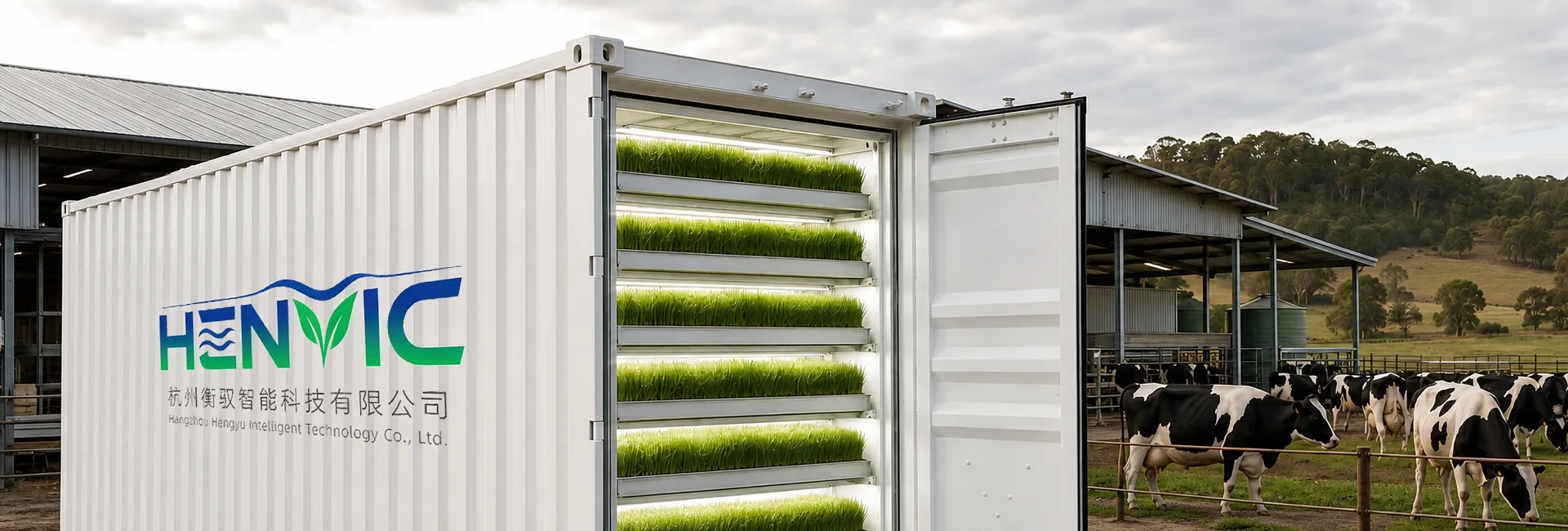
Closed-Loop Controlled-Environment Production as an Engineering Discipline
1. Definition and Scope
A smart cultivation cabin is a factory-built, sealed, thermally insulated enclosure in which the complete growth environment — light, temperature, humidity, carbon dioxide, air movement, root-zone or substrate chemistry, and irrigation — is internally generated, continuously measured and closed-loop controlled by software, so that biological output becomes a scheduled industrial quantity independent of season, latitude and weather.
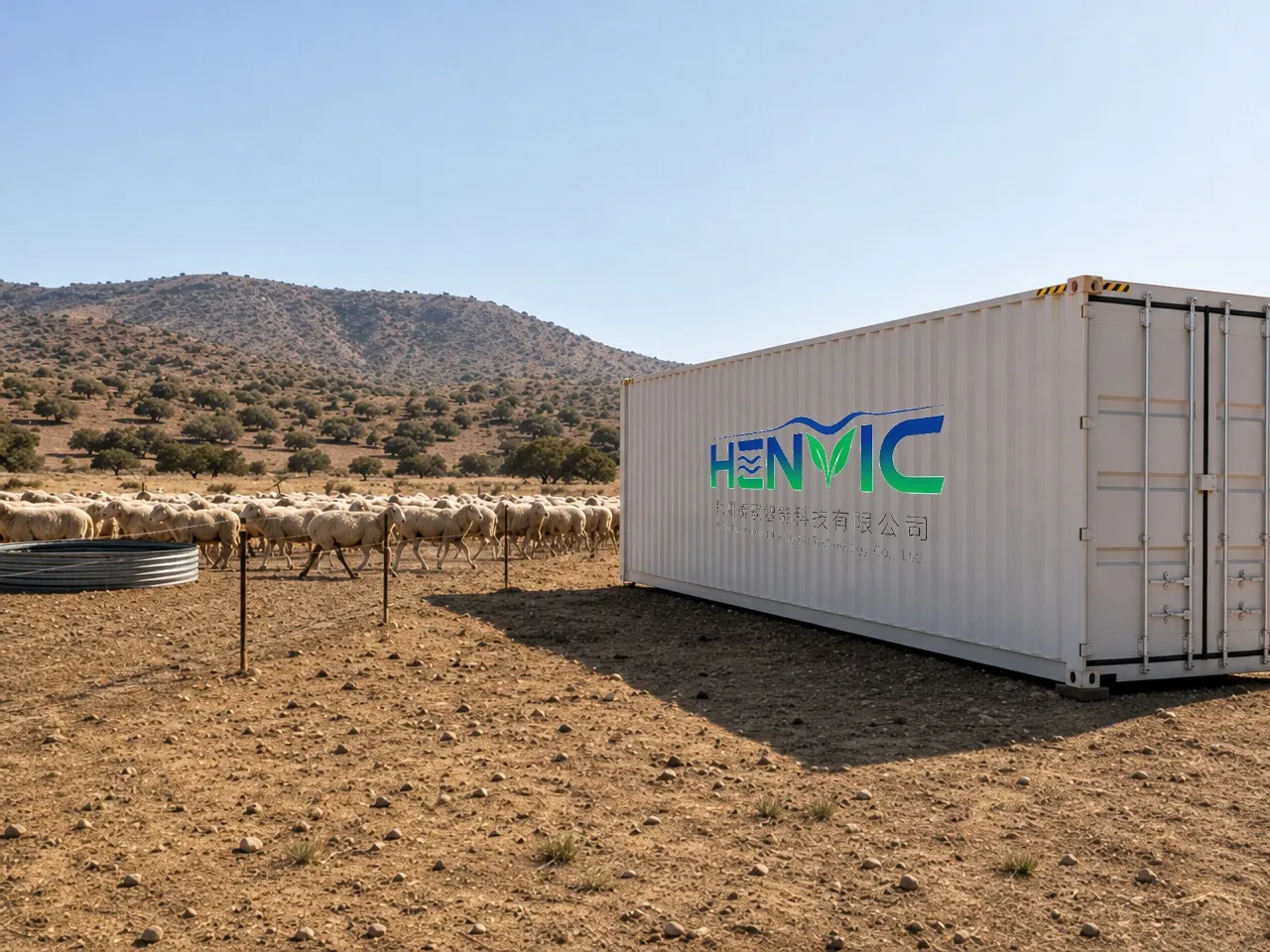
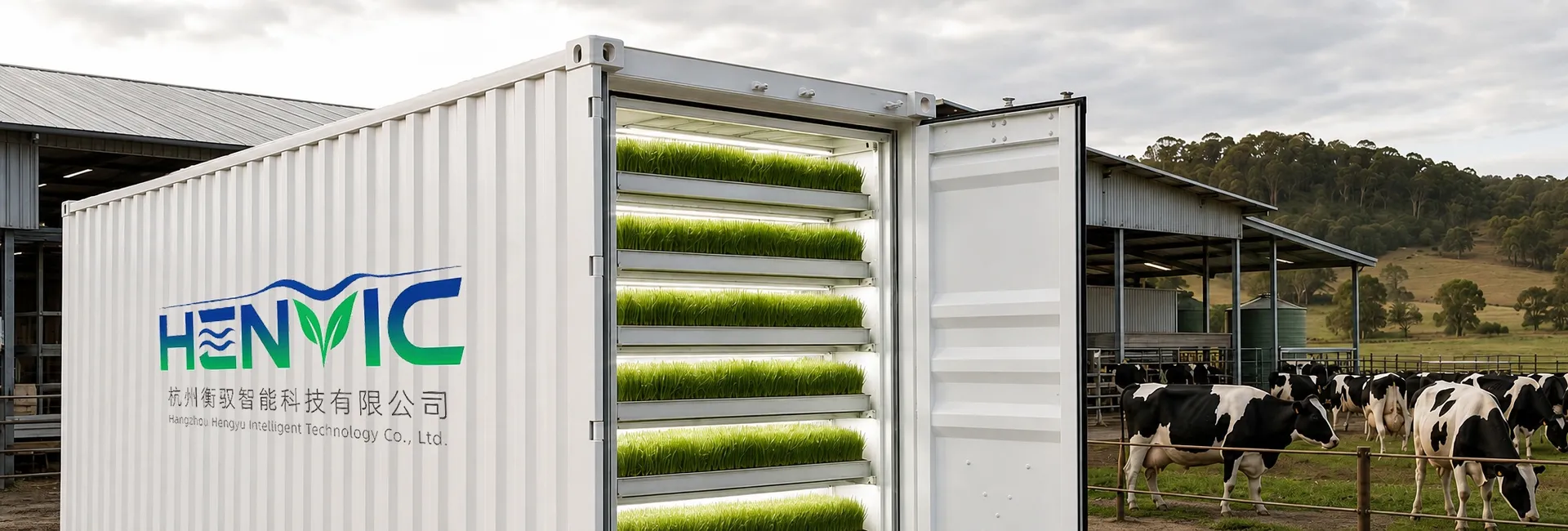
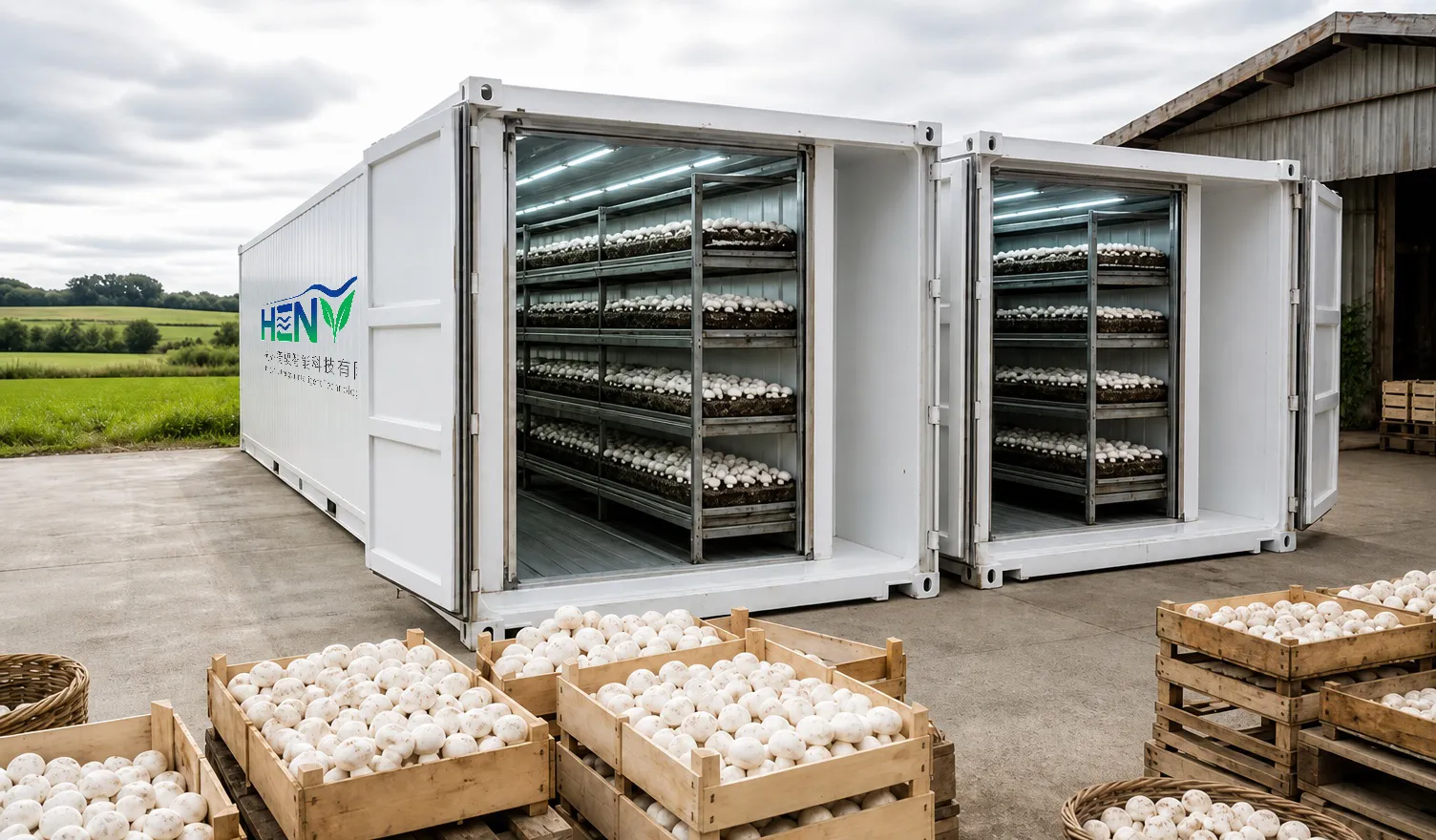
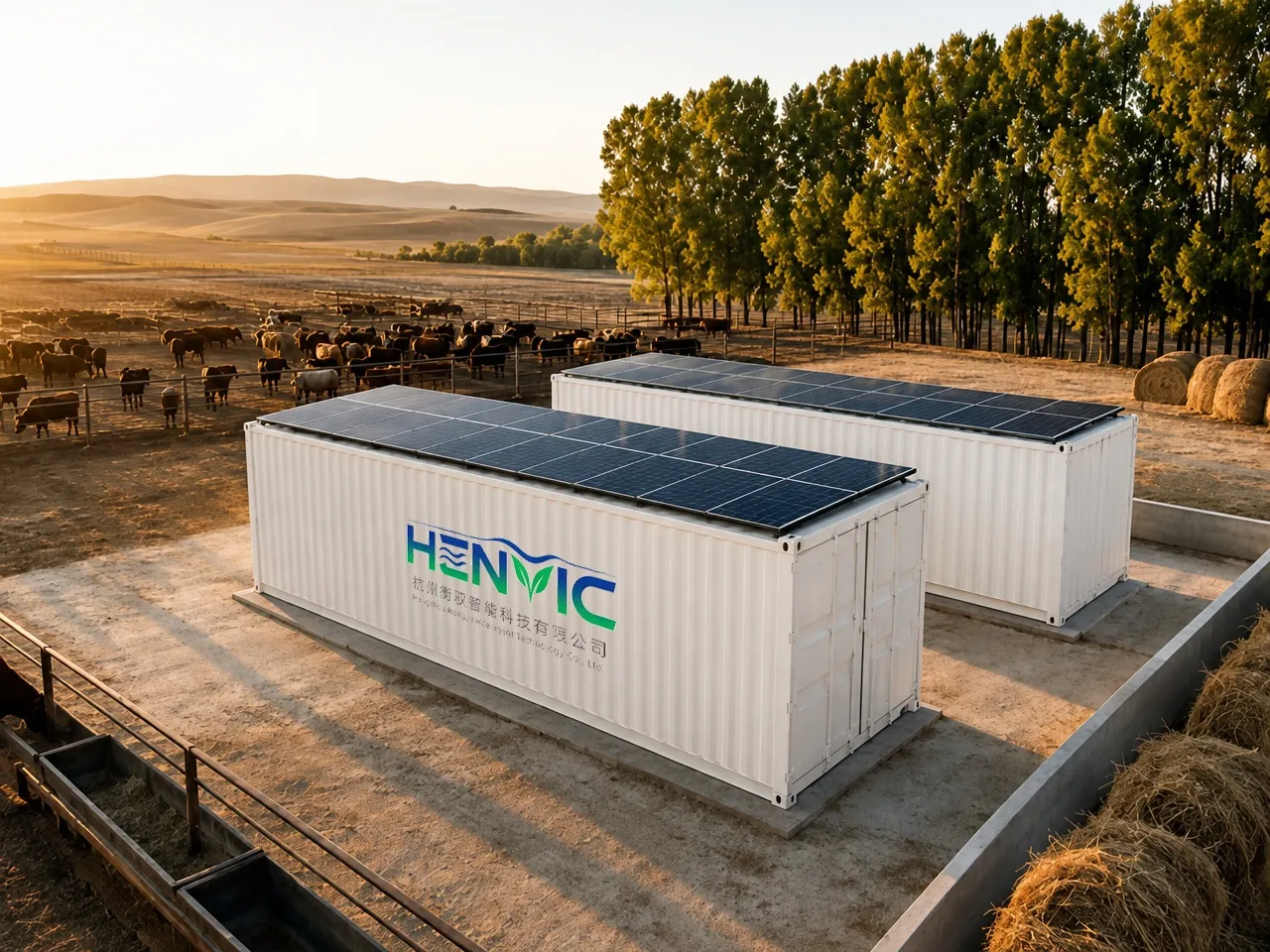
The category covers several form factors under one control problem: retrofitted 20- and 40-foot containers; insulated panel rooms of 50–600 m³; rack-mounted laboratory cabinets; and mushroom fruiting cabins with a fundamentally different light and CO₂ regime. What unites them is not the crop but the architecture: a boundary-value system in which the external environment is a disturbance term rather than a driver.
The cabin's real function is narrow and worth stating plainly. It converts a biological capability into an industrial one. It cannot create a capability the organism does not possess — no enclosure makes an undomesticated strain fruit or an ill-adapted cultivar head properly. What it delivers is repeatability, schedulability, traceability and geographic independence for a capability already proven in research.
2. The Governing Physics
A cabin is best designed from its balances rather than its catalogue.
Energy balance. Inside a sealed, lit module, essentially all electrical input ends up as heat inside the envelope: lighting, drivers, pumps, fans and controllers. The cooling plant must therefore reject roughly the total electrical draw, not a fraction of it. This single fact dictates that lighting efficacy and cooling COP are coupled economics — a more efficient lamp buys back its premium twice, once in the lamp bill and once in the heat it no longer creates.
Water and latent balance. Transpired water has nowhere to go. Every gram of evaporation from the canopy must be removed by dehumidification or exhaust, and the latent load is large: water's latent heat of vaporisation is about 2.45 MJ/kg, so a canopy transpiring a couple of litres per square metre per day imposes a continuous thermal duty that is routinely underestimated when plant sizing is done on room volume instead of on peak transpiration. Sizing dehumidification at peak, not at average, is the difference between a stable cabin and one that drips from the ceiling at midday.
CO₂ mass balance. During lit periods the canopy depletes cabin CO₂ at a rate set by net assimilation; enrichment must replace that flux plus leakage and any ventilation inflow. The practical consequence is that CO₂ enrichment only pays where light dose is high enough to make carbon the limiting substrate — enriching under a dim canopy buys very little, and the value of the enrichment stage scales with PPFD.
Vapour pressure difference (VPD) is the variable that ties the water and heat balances to agronomy. Stomatal conductance, nutrient transport in the xylem and calcium delivery to enclosed young leaves are all governed by the gradient between leaf and air, not by relative humidity alone. Treating VPD as a first-class controlled variable, rather than as a number derived for display, is arguably the clearest single marker of a serious cabin.
3. Subsystem Architecture
Envelope. Insulated panels with deliberately managed thermal bridging, sealed against dust and spores, with a separate material airlock. Sealing is a biosecurity control as much as an energy control. Interior surfaces must survive permanent condensation and repeated sanitiser exposure; drainable floors and full condensate evacuation are not optional details.
Lighting. LED bars sized in photon terms — photosynthetic photon flux density at the canopy and daily light integral — with spectrum as a control input rather than a fixture choice: blue governs compactness and phenolic development, red drives photosynthetic efficiency, far-red manipulates leaf expansion but risks elongation and bolting when over-supplied. Uniformity between tiers must be measured, not assumed.
Climate plant. Heat-pump heating and cooling, dedicated humidification, dehumidification, and CO₂ dosing. Modern ultra-low-ambient compressors extend deployment into severe cold; redundancy — a second environmental unit per cabin — is now normal in cluster farms, because one controller failure otherwise collapses an entire batch.
Distribution. Air, water and light are flow-field problems. The decisive metric is spread across every shelf level and corner, not nameplate capacity. A rack with 5 % temperature spread and 30 % light spread between tiers is, agronomically, several different cabins stacked on one another. Low-velocity, non-directed canopy sweep — typically on the order of 0.1–0.3 m/s — sustains transpiration-driven mineral transport without mechanical damage or desiccation.
Nutrient and irrigation loop. Recirculating hydroponic, substrate or spray systems with dosing for acid and stock solutions, plus — the most frequently under-specified stage — root-zone chilling and oxygenation. Warm, hypoxic solution is the entry point for oomycete pathogens; a cabin that cools only the air loses crops from below.
Instrumentation and edge control. Redundant sampling of air temperature, humidity, VPD, CO₂, photon flux, and solution EC, pH, temperature, level and dissolved oxygen. The edge controller executes staged recipes — set-points, ramps, dwell times, differential thresholds, alarms and interlocks — with complete batch logging.
Software layer. Two functions are routinely conflated. Recipe execution encodes a species' environmental profile and replays it automatically by growth stage. Digital-twin cluster supervision exposes every parameter and control action across dozens of modules for yield and energy optimisation. The first produces crops; only the second produces a factory.
4. Control Design
Practical cabins are cascaded loops, not single set-points. Air temperature is an inner loop with slow thermal mass; humidity is controlled through dew-point and latent input rather than through RH directly, because RH is a function of temperature and therefore fights the thermal loop; CO₂ is a fast, low-inertia loop demanding tight valve or regulator authority; lighting is scheduled, not regulated. Feedforward from measured outdoor conditions and from crop stage reduces the overshoot that pure feedback guarantees on a slow plant.
Anti-windup, sensor voting with outlier rejection, and explicit interlocks — for example, refusing to open fresh-air dampers when the cabin is in a CO₂-enriched phase, or holding dosing when solution temperature is out of band — are what make the system safe to run unmanned. Alarm history and calibration records are not documentation overhead; without them the cabin is a box with a pump.
5. Typical Design Bands
Values below are general controlled-environment practice for leafy and fruiting crops, offered as starting bands for experimentation, not as audited site data. They shift with species, strain, fixture and climate, and must be validated per cabin.
| Variable | Common band | Comment |
|---|---|---|
| PPFD (leafy crops) | 150–300 µmol·m⁻²·s⁻¹ | Higher doses raise yield but also tipburn risk and energy cost |
| Daily light integral | 12–17 mol·m⁻²·d⁻¹ | Nitrate draw-down depends on light per unit nitrogen |
| Photoperiod | 16–20 h | Long days risk bolting in sensitive cultivars |
| Cabin CO₂ (lit phase) | 800–1,200 ppm | Value scales with PPFD |
| VPD | 0.4–0.8 kPa | Primary lever for calcium delivery and defect rate |
| Canopy air velocity | 0.1–0.3 m/s | Draft-free sweep; directed jets deform and desiccate |
| Solution pH / EC | 5.5–6.5 / 1.0–1.6 mS/cm | Species-dependent; drift here is invisible on dashboards |
| Root-zone temperature | 18–22 °C | Chilling and oxygenation are the real disease controls |
| Dissolved oxygen | >5–6 mg/L | Hypoxia precedes most root failures |
| Fruiting humidity (mushrooms) | 85–95 % RH | Must be held without free water on primordia |
6. Energy Accounting
Energy, not agronomy, decides whether a cabin survives commercially. A transparent decomposition, stated with its assumptions, is more useful than any headline figure. Take a leafy cabin at 200 µmol·m⁻²·s⁻¹ for 16 h with lamps at roughly 2.7 µmol/J: that is about 75 W per square metre of canopy, or on the order of 1.2 kWh per square metre per day. Because that light becomes heat, cooling at a COP near 3 adds perhaps 0.4 kWh, humidification and dehumidification of the transpiration load add a further comparable increment, and pumps, fans and controls add a smaller but non-trivial tail. The result is a daily figure in the low single kWh per square metre of growing area, which converts to cost per kilogram only when divided by the actual harvested output per square metre per day — the denominator that vendors leave out of spec sheets.
Two consequences follow. Adding tiers raises output per footprint but degrades airflow and light uniformity and increases the engineering burden, so stacking depth has an optimum, not a maximum. And because lighting dominates, the highest-leverage control action available to an operator is often to reduce light dose in the phases where it contributes least to final quality.
7. Biosecurity, Commissioning and Verification
A sealed module converts one contaminated batch into many. Cleaning and disinfection between cycles, filter integrity, airlock discipline and personnel flow are the primary biosecurity controls — not the HEPA stage alone.
Commissioning should be evidence-generating. Grid mapping of temperature, humidity, CO₂ and photon flux at every tier and corner establishes whether the design space the recipe assumes actually exists. Pressure-decay or leakage testing proves envelope integrity and is the prerequisite for any claim of contaminant exclusion. Recipe replay validation runs a full cycle against logged targets and quantifies deviation. Sensor calibration is scheduled, not reactive: a 0.2 mS/cm EC offset or a few percent RH drift is invisible on a dashboard and unmistakable in the harvest.
8. Failure-Mode Diagnosis
Erratic output should be worked along a fixed chain rather than by adjusting set-points empirically:
sensor → control logic → plant capacity → distribution field → envelope integrity → input quality (seed, spawn, substrate, water).
The recurring patterns are specific and learnable. Margin necrosis in leafy crops points to low VPD and absent canopy airflow, and is fixed by raising the gradient before adding calcium to the tank. Elongation and loose heads point to photoperiod, far-red excess or warm roots. Systemic root disease points to root-zone temperature and dissolved oxygen rather than to the nutrient formula. Batch-to-batch drift points to calibration. And "half the rack is fine, half is not" is almost always a flow-field problem, not a set-point problem.
9. Where the Economics Hold
Cabins do not generally beat open-field production on cost per kilogram for commodity crops; they win where the alternative does not exist. The defensible niches are consistent: rare or previously uncultivable species for which no local climate provides the required microclimate; pharmaceutical and research-grade material; food-safety-critical supply with batch-level traceability; urban sites where land and cold-chain costs dominate; and arid, polar or otherwise hostile climates, including national food-security programmes. Asset-light structures — cooperatives or village collectives owning the cabin while a specialist operator leases and runs it — have proven an effective way to separate capital intensity from operational competence, and are arguably the most transferable innovation in the sector.
10. Trajectory
Fixed set-point tables are giving way to adaptive control: vision-based growth staging that advances or holds a phase, model-predictive lighting that trades energy against target yield, per-tier airflow engineering for deeper racks, and cluster supervision that treats dozens of modules as one schedulable factory. Formal technical specifications for cultivation cabins are being drafted in several markets, which will compress vendor quality spread and make procurement comparable for the first time.
Hardware is commoditising quickly; validated biological recipes and energy per unit of output are not. Expect cabins to be judged, increasingly, by kilowatt-hours per kilogram and by defect rate at pack-out — not by dashboard features.
11. Specification Checklist
Ask in order: which organism and which strain or cultivar, and is the recipe validated on it? What is measured uniformity of light, temperature and airflow per tier? Is dehumidification sized at peak transpiration? Is the root zone chilled and oxygenated, and is dissolved oxygen instrumented? Is VPD controlled or merely displayed? Is the environmental plant redundant? Does the software expose staged recipes, full batch logging, alarm history and calibration records? What is the contingency for a six-hour power loss? Who owns the recipe data?
A cabin that cannot answer these questions is a lit box with a pump.
Evidentiary note. This is a general engineering treatment. Physiological ranges in Section 5 are typical design bands drawn from controlled-environment practice, not audited site measurements, and must be established experimentally for each species, strain and fixture. The energy arithmetic in Section 6 is an illustrative calculation with its assumptions stated explicitly, offered as a method for building a business case rather than as a performance claim; published intensities for indoor production vary too widely for any single figure to be meaningful. No specific deployment, yield, cost or vendor performance is asserted.