1. Introduction
A smart cultivation container is a standardized shipping container that has been retrofitted into a fully controlled-environment growing unit — an enclosed, sensor-rich, software-driven "digital ark" for raising plants or fungi anywhere a container can be delivered. As urbanization shrinks arable land and climate volatility disrupts conventional field farming, these units have emerged as a pragmatic bridge between laboratory plant factories and open-field agriculture: they deliver factory-grade precision at a fraction of the footprint, cost and construction time of a purpose-built facility. A single 40-foot container can produce the equivalent of several acres of open-field yield per year while sitting on a parking lot, a rooftop, a farmyard or a disaster relief site.
2. From Steel Box to Living Factory
The physical transformation begins with the shell. Standard containers offer structural rigidity, stackability and global logistics, but steel conducts heat and lacks insulation, so interiors must be lined with thermal insulation to decouple the environment from outside temperature swings. Airtight doors and gasketed openings allow the unit to hold humidity — typically 80–95% for fruiting fungi or 60–80% for leafy greens — without continuous energy loss. Inside, the container is organized as a vertical stack of cultivation layers: multi-tier shelves maximize usable volume per square metre, while leaving floor space for equipment racks, reservoirs and walkways.
The climate system is the heart of the unit. A compact HVAC unit regulates temperature, a humidifier or misting system supplies moisture, and variable-speed fans or exhaust fans drive air exchange to prevent CO₂ buildup and stagnant microclimates. For fungal fruiting, where mushrooms lose turgor and abort pins below roughly 80% relative humidity, humidity control is typically the single most demanding parameter; for hydroponic vegetables, the balance shifts toward airflow and nutrient delivery.
3. The Intelligence Layer: Sensors, IoT and AI
What makes the container "smart" is its layered control architecture, typically consisting of three tiers: sensing, control and monitoring.
Sensing tier. A distributed network of high-precision sensors samples the environment continuously: light intensity and spectrum, air temperature and relative humidity, CO₂ concentration, nutrient solution pH and electrical conductivity (EC), dissolved oxygen, and water temperature in recirculating systems. In a commercial container plant factory, hundreds of sensor points can be deployed across a single unit, each streamed in real time.
Control tier. Edge controllers — PLCs or dedicated climate computers — execute closed-loop regulation. A humidistat raises humidifier output when RH dips below the setpoint; a CO₂ controller ramps ventilation when the concentration exceeds the growth-optimal band; a thermostat switches heaters, chillers or dehumidifiers as needed. Lighting schedules are programmed by photoperiod, with LED fixtures delivering species-specific spectra — for example, a red-to-blue ratio of about 4:1 for lettuce, or full-spectrum light supplemented with far-red for strawberries.
Monitoring and remote tier. Cloud-connected gateways push data to dashboards on PC or mobile, so a single operator can supervise multiple containers from anywhere. Historical data feeds anomaly detection: if temperature drifts out of band overnight, or EC drifts across a flush, operators receive alerts before the crop is compromised. More advanced deployments layer AI onto the closed loop — models trained on prior flushes can tune setpoints, predict harvest timing and flag mold risk before visible symptoms appear, effectively letting the container learn its own crop.
4. Cropping Systems Inside the Box
The cargo space adapts to two fundamentally different cultivation paradigms, and many smart containers support both.
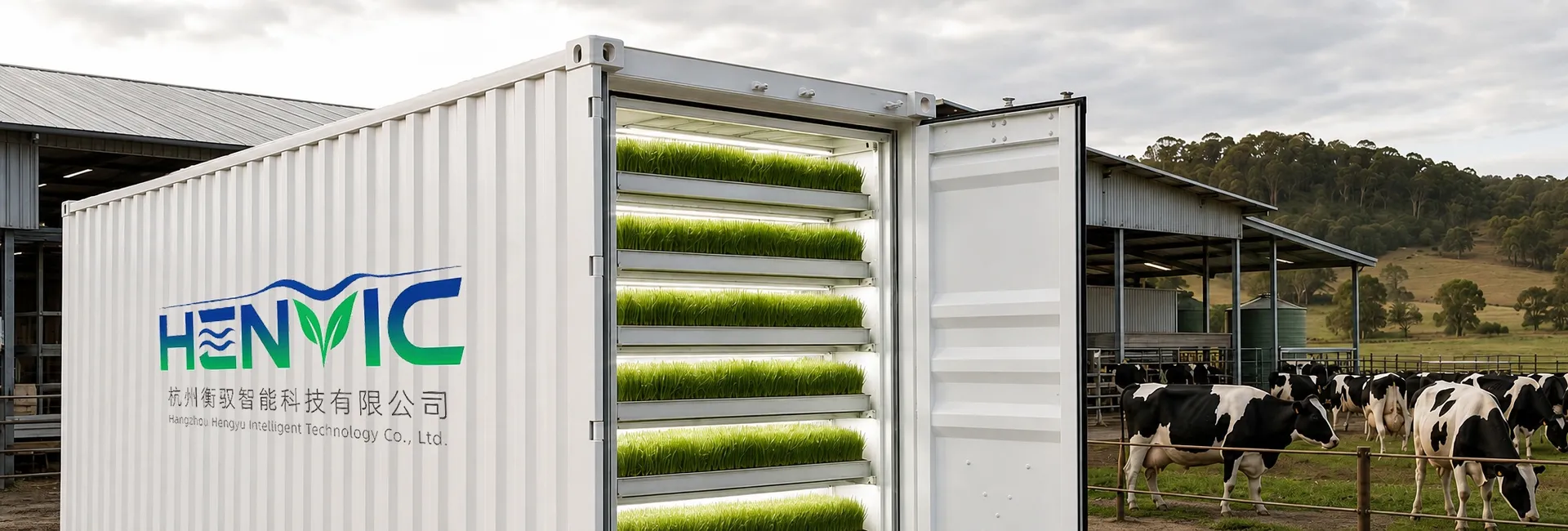
Hydroponic and aeroponic systems for leafy greens, herbs and fruiting vegetables: crop roots are immersed in, or misted with, a recirculating nutrient solution, with the container's ventilation replacing natural wind to drive gas exchange at the leaf surface. Because the environment is sealed, the unit can be sited on a rooftop or in a courtyard without soil contamination risk.
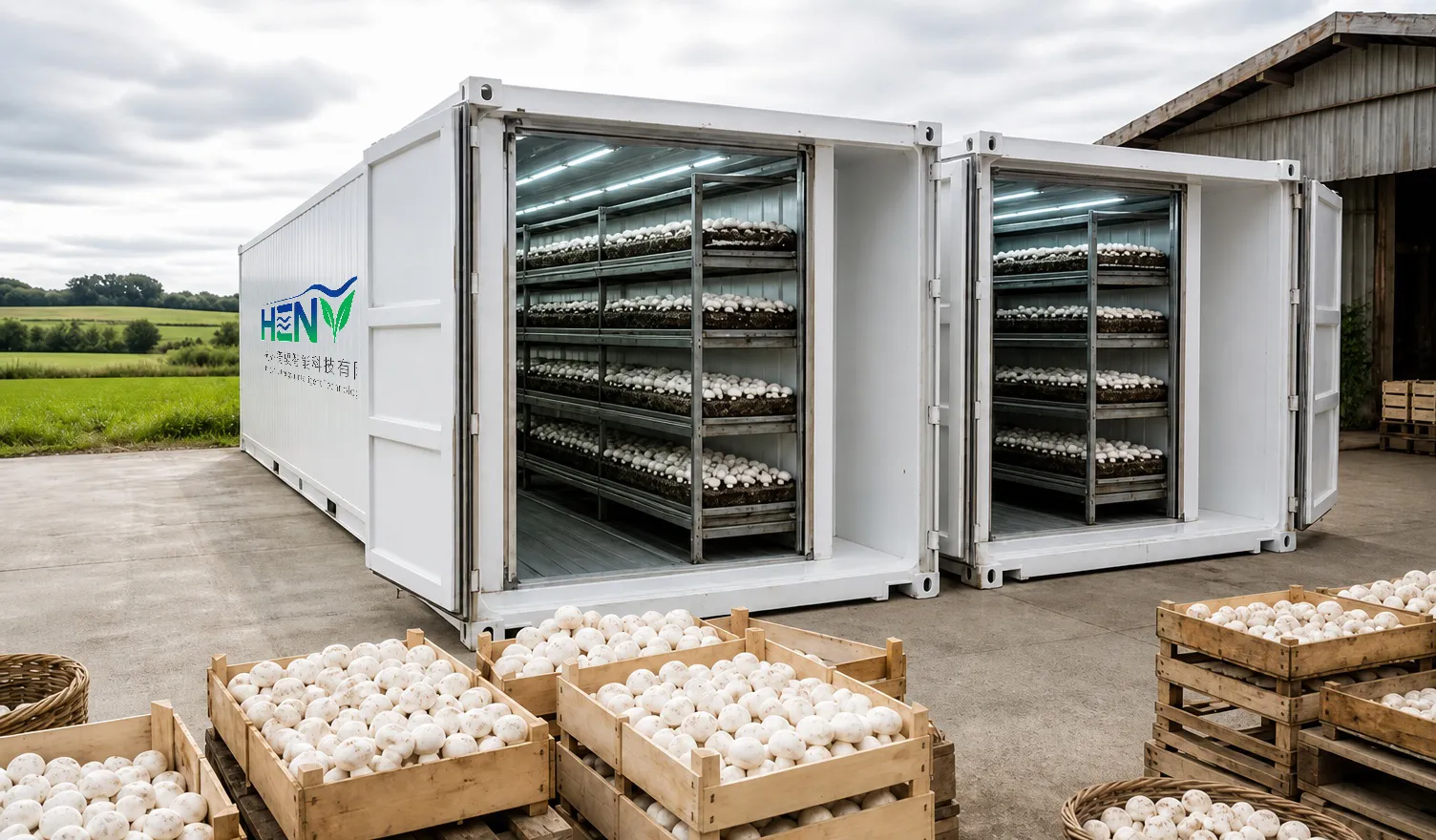
Fungal fruiting chambers for mushrooms: colonized substrate blocks are stacked on racks, and the container is driven into a high-humidity fruiting mode — dark incubation during colonization, then humidity at 80–95% and constant fresh-air exchange during fruiting. Commercial examples such as the smart mushroom cabins deployed in China give fungi a genuinely "digital life," with every flush monitored and logged.
Soil-based systems also exist, particularly in mobile units: containers on farms have been used as movable greenhouses for seedlings or high-value crops, where the shell provides shelter and the control system provides the refinement.
5. Applications and Deployment Models
The versatility of the container form factor maps directly onto deployment scenarios:
- Urban and community agriculture. Containers on restaurant rooftops, school courtyards or residential community lots supply leafy greens and mushrooms locally, cutting transport distance to metres.
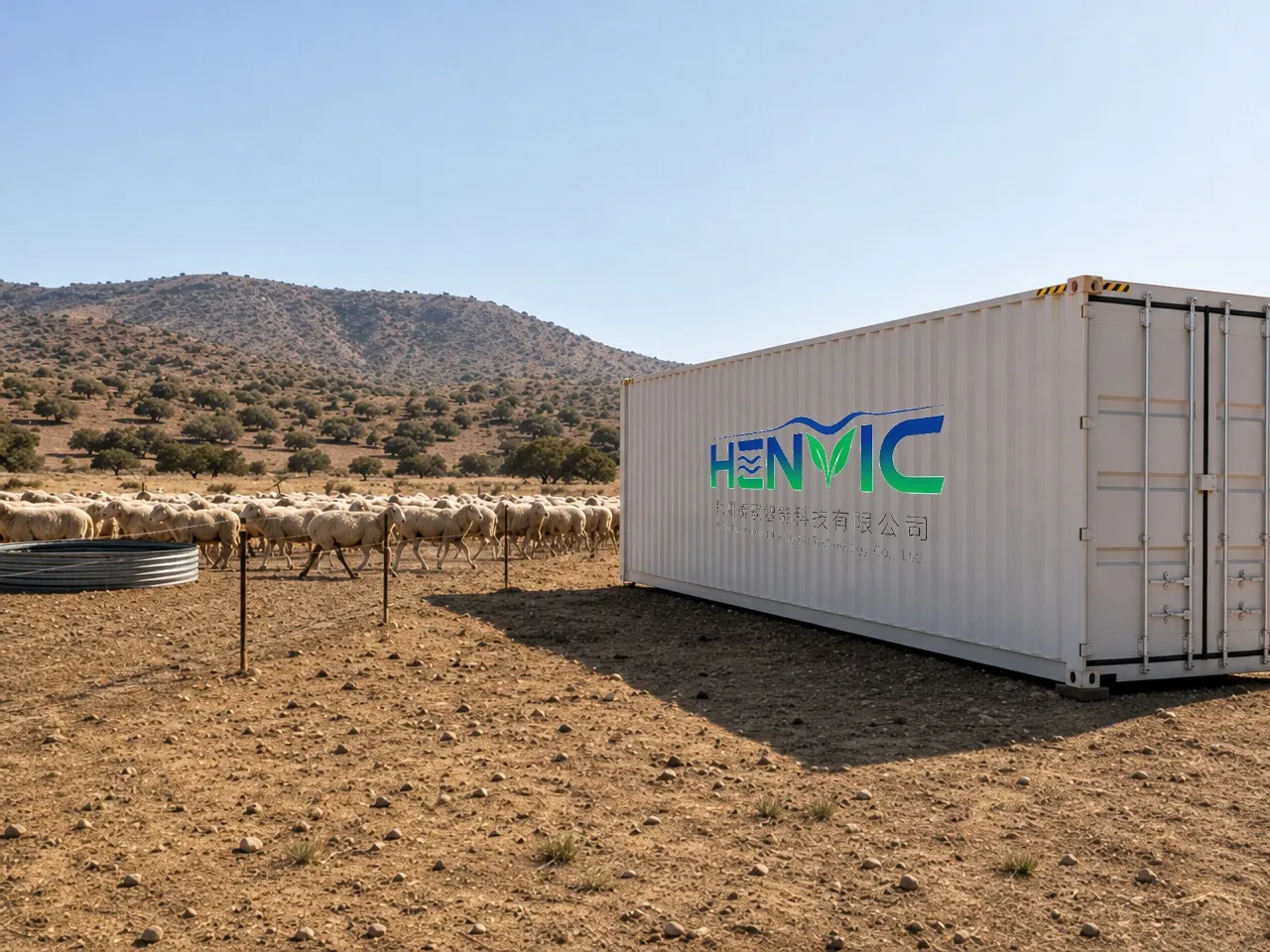
- Farm extension. Mobile containers let conventional farms test new varieties or extend the growing season without building permanent greenhouse capacity.
- Emergency and remote supply. A standard container can be trucked to a disaster zone, military base or remote outpost and be producing food within days, powered by onboard solar and a battery bank.
- Commercial specialty production. Mushroom growers and microgreens producers use containers as scalable, replicable production lines: one unit equals one product line, and scaling is as simple as adding containers.
6. Energy, Economics and Challenges
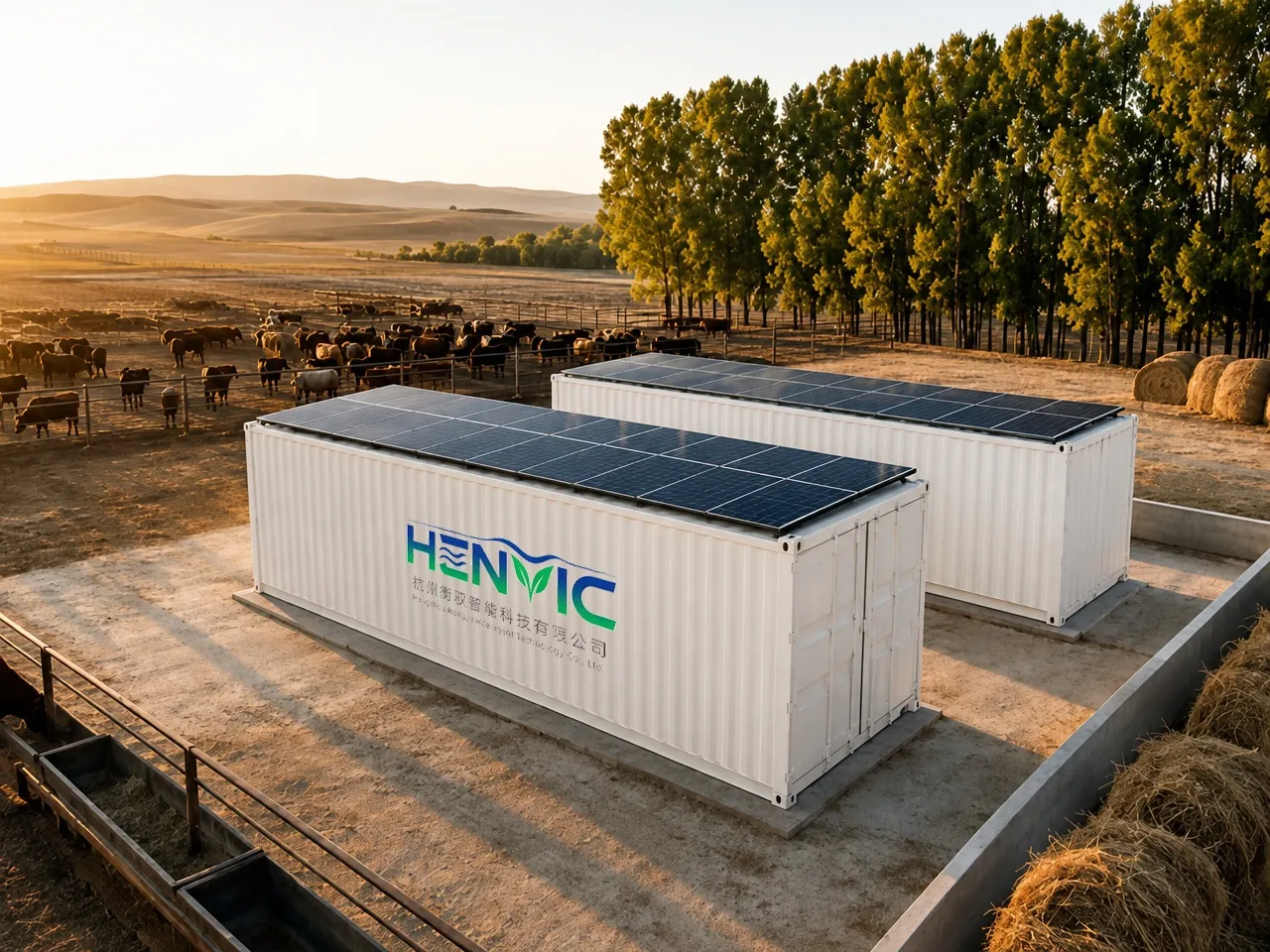
The main economic headwind is energy. Climate control, lighting and humidification run continuously, and the container's insulation helps but does not eliminate the load; hybrid power — rooftop photovoltaics plus storage — is increasingly specified to offset the running cost. Capital cost per unit is also higher than a greenhouse per square metre, so the economic case rests on high-value crops, high yield density and locational advantage. Finally, biological risk remains: an enclosed high-humidity environment is exactly where pathogens thrive, so hygiene protocols, filtration and monitoring discipline are non-negotiable.
7. Conclusion
The smart cultivation container collapses the distance between the lab and the field. It packages controlled-environment agriculture into a standardized, shippable, software-managed unit — one that can grow lettuce with a precise red-blue spectrum in one deployment and fruit oyster mushrooms in near-saturated air in another. Its real promise is not that it replaces conventional agriculture, but that it makes factory-grade precision available wherever a container can be parked, powered and connected: from a city rooftop to a relief camp, at a scale that ordinary growers can actually own and operate.