Introduction
A container farm makes a specific trade. In exchange for abandoning the two things that have defined agriculture for ten thousand years — weather and soil — it gains something rarer: control. Inside an insulated shipping container, the grower sets the temperature, authors the light, decides when it rains, and knows exactly what the roots are eating. Nothing outside the box matters.
But control is never free. Every substituted variable becomes an input with a price, and every automated decision becomes a line on a balance sheet. To judge whether container farming works, you have to read two ledgers at once. One is technical: which variables must be engineered, and within what tolerances. The other is economic: what each engineered variable costs, and whether the resulting crop can be sold for more than the sum.
This article walks through both ledgers — first the technology, then the money — and then considers where the two intersect, because that intersection is the only place the business case actually lives.
Ledger One: The Technology
What the Box Replaces
Open-field agriculture is a negotiation with an uncontrollable partner. Sunlight arrives on a seasonal curve, rain on an unpredictable one, and soil quality is a lottery of geology and prior use. A container replaces all three with engineered systems:
Natural input
Engineered substitute
Controlled variable
Sunlight
Horticultural LED arrays
Spectrum, PPFD, photoperiod, DLI
Soil
Hydroponic or aeroponic solution
EC, pH, dissolved oxygen, root-zone temperature
Rain
Recirculating irrigation with dosing
Volume, frequency, nutrient concentration
Climate
HVAC, humidification, ventilation
Temperature, humidity, VPD, CO₂
Season
Sealed envelope
Held constant year-round
Pollination
(Only for fruiting crops) mechanical or manual
Timing, coverage
That table is the technical ledger in miniature: six natural systems, replaced by six engineered ones, each with its own sensors, actuators, and failure modes.
The Envelope
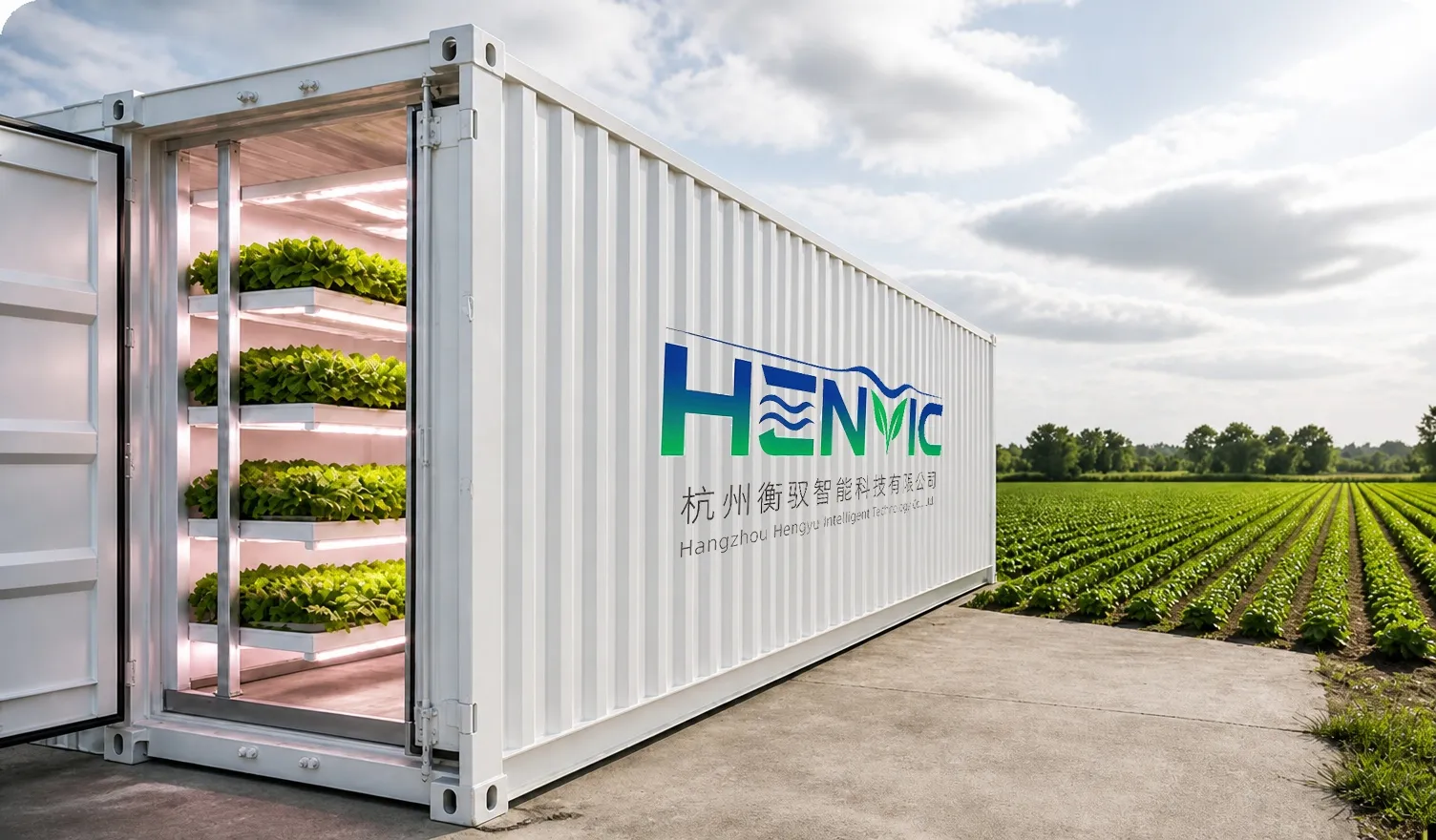
The container itself is the first and most underrated subsystem. A standard 40-foot ISO box offers roughly 30 square meters of floor area, and insulating it with 50–100 mm of polyurethane or PIR foam turns it from a metal shell into a thermal buffer. Airtight construction and vapor sealing prevent moisture from condensing on cold surfaces and dripping onto the canopy. Sealed penetrations route power, water, drainage, and data without compromising the envelope.
Because the box is closed, two things become possible that are difficult in an open greenhouse: pesticide-free production (no pests get in if nothing gets in) and CO₂ enrichment (the gas stays where you put it instead of escaping to the atmosphere). Both are technical advantages that translate directly into the economic ledger.
Light: The Dominant Engineered Input
With no windows, light is entirely manufactured, and it is the single greatest determinant of yield and of energy cost.
Leafy greens respond to a spectrum weighted toward red (~660 nm) and blue (~450 nm), with trace far-red and green shaping morphology. Fruiting crops and herbs have their own recipes. Intensity is set in PPFD — generally 150–300 µmol/m²/s at canopy for greens — and multiplied by photoperiod to yield the daily light integral (DLI), the most useful single number for tuning output. Lettuce targets 12–17 mol/m²/day.
Modern fixtures achieve 2.5–3.5 µmol/J, converting most electricity into photons rather than heat. Multi-tier racking places lights close to each canopy, multiplying the growing surface several times over the floor area, but also multiplying the lighting load by the same factor.
Roots: Hydroponics and the Chemistry of a Prescribed Diet
Soil is replaced by solution. Nutrient film technique (NFT), deep water culture (DWC), ebb-and-flow, and aeroponics each trade off simplicity, thermal stability, and forgiveness of pump failure. NFT is the leafy green workhorse; DWC is more buffered; aeroponics delivers the most oxygen but the least tolerance for interruption.
The chemistry is held in two numbers. Electrical conductivity (EC) of roughly 1.2–2.0 mS/cm tracks total dissolved salts and must be corrected as plants drink faster than they feed. pH of 5.5–6.5 keeps iron, calcium, magnesium, and micronutrients available; outside that window, deficiency symptoms mimic disease. Automatic dosing driven by EC and pH probes closes the loop, replacing the guesswork of soil amendment with programmed correction.
Water recovery in recirculating systems runs 90–95 %, making hydroponics the most water-efficient production method in commercial agriculture.
Climate and the Root Zone
A sealed box is a closed climate loop, and its variables interact rather than move independently.
Air temperature for leafy greens sits at 18–24 °C; fruiting mushrooms demand species-specific bands, often cooler. Root-zone temperature is controlled separately — usually 18–22 °C — because warm solution promotes root rot, the most common failure in recirculating systems. Humidity runs 60–75 %, but the better control metric is vapor pressure deficit (VPD), typically 0.8–1.2 kPa for greens, which governs transpiration. Because the box traps transpired moisture, dehumidification is continuous, not occasional. Ventilation removes moisture and manages CO₂, but also dumps cooled air, so ventilation and refrigeration are balanced moment to moment rather than switched on and off.
For mushrooms, CO₂ becomes a morphological control rather than a waste product. High CO₂ during colonization keeps the mycelium growing; low CO₂ during fruiting forces compact caps instead of leggy stems. A trace photoperiod of 50–200 lux then acts as a signal for direction and color.
Automation: Closing the Loops
Every variable above becomes reliable only when it is measured and corrected without human intervention. Sensor networks track temperature, humidity, CO₂, VPD, EC, pH, dissolved oxygen, and light. Controllers schedule photoperiods, drive fertigation, coordinate ventilation against cooling, and log deviations. Remote dashboards let one operator supervise several containers; alerting catches a failed pump or an open door before it becomes a lost crop. Robotics, where deployed, absorb the heaviest labor — seeding, transplanting, and harvest.
The technical ledger, in short, is the list of variables the system can hold inside a narrow window. The economic ledger is what it costs to hold them there.
Ledger Two: The Economics
Capital Expenditure
Container farms are capital-intensive relative to their output. A turnkey leafy green container ranges from roughly
60
,
000
𝑡
𝑜
𝑜
𝑣
𝑒
𝑟
150,000, and a mushroom container from roughly
50
,
000
𝑓
𝑜
𝑟
𝑎
𝑏
𝑎
𝑟
𝑒
𝑐
𝑙
𝑖
𝑚
𝑎
𝑡
𝑒
−
𝑐
𝑜
𝑛
𝑡
𝑟
𝑜
𝑙
𝑙
𝑒
𝑑
𝑠
ℎ
𝑒
𝑙
𝑙
𝑡
𝑜
𝑤
𝑒
𝑙
𝑙
𝑜
𝑣
𝑒
𝑟
200,000 for a fully automated, multi-zone system with cleanroom inoculation. The spread is driven almost entirely by three factors: automation level, tier count, and lighting quality. Each raises capital cost and reduces labor or raises yield — a trade that must be evaluated per unit, not assumed.
Operating Expenditure
The recurring ledger is dominated by one line.
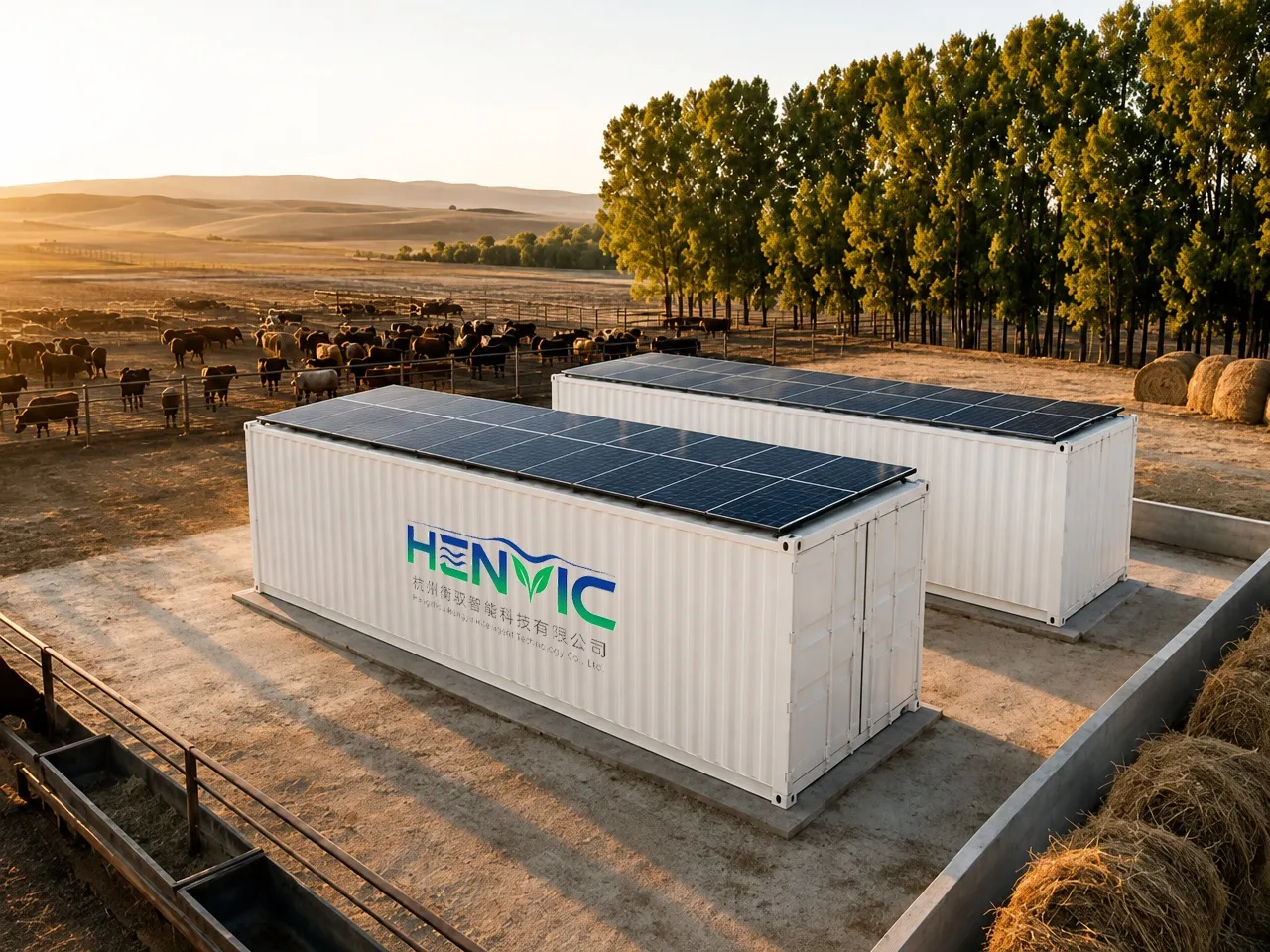
Electricity. Lighting and cooling together account for 60–80 % of operating expense in most container farms, and a unit may draw 30–60 kW continuously. Mushroom operations substitute refrigeration and humidification for lighting but face the same order of magnitude, compounded by the fungus's own metabolic heat, which must be removed from the chamber. This is why siting on a low-tariff grid, or behind a solar array, changes the economics more than nearly any operational improvement available.
Labor. Automation is what makes the numbers work. Seeding, transplanting, climate management, and to some degree harvest can be mechanized or software-scheduled, collapsing labor per kilogram. Operations that rely on manual labor for climate management tend to lose money regardless of yield.
Substrate and consumables. For hydroponics, this is nutrient salts and water — modest. For mushrooms, it is sawdust, bran, gypsum, and spawn, plus sterilization energy — a larger and more variable share.
Maintenance. Pumps, chillers, humidifiers, and LEDs all have finite lives. A container farm runs its equipment continuously, so failure rates are higher than for seasonal operations and must be budgeted.
Revenue: Volume Versus Price
Container farms cannot win on volume. Field agriculture benefits from scale that a 30-square-meter box cannot approach, and head-to-head commodity competition on price is not a viable strategy.
What the model offers instead is price premium on a modest yield. A container may produce several hundred to a few thousand heads of lettuce per week, or a comparable mass of herbs, microgreens, or specialty mushrooms. Sold into restaurants, grocers, and subscription channels on the strength of freshness, locality, and pesticide-free certification, that volume supports a viable niche business.
Mushrooms illustrate the point sharply: low absolute volume, high value per kilogram, which makes a single sealed chamber economically meaningful in a way that a single box of commodity lettuce is not.
The Utilization Lever
The quietest and most decisive economic variable is utilization. An empty tier earns nothing while continuing to consume rent, capital depreciation, and baseline climate load. Success requires back-to-back harvest cycles and production matched to actual demand — which is why a rolling daily schedule matters more than a single perfect batch. A container farm at 70 % utilization and a container farm at 95 % can have identical technology and utterly different economics.
Risk: Where the Money Is Lost
Three failure modes account for most losses, and each maps back to the technical ledger.
Contamination. Green mold (Trichoderma), bacteria, and root rot are the mushroom grower's and hydroponic grower's chief adversaries. A single contaminated zone can destroy a batch. Hygiene protocols, air filtration, positive pressure, and UV or ozone water treatment are not optional overhead — they are insurance.
Equipment failure. A pump outage in NFT can dry roots in minutes. Refrigeration failure during a fruiting flush can abort an entire harvest. Redundancy and alerting are economic instruments, not engineering luxuries.
Demand mismatch. Produce that cannot be sold on schedule becomes waste, and perishable greens have a short window. The production schedule must be driven by the purchase order, not the other way around.
Where the Two Ledgers Meet
The technology ledger and the economic ledger are not parallel documents; they are the same document viewed from two angles. Every technical parameter has a price, and every cost line buys a specific capability.
High DLI raises yield and raises the electricity bill. Precise VPD control prevents tip burn and abort — and requires continuous dehumidification. Cold-chain-free local delivery depends on being physically near the market, which constrains siting and often raises rent. Pesticide-free certification is a marketing premium purchased with a sealed envelope and strict airlock discipline.
The implication is that there is no universal answer to whether container farming "works." The same technology produces profit or loss depending on five contextual factors: the price of electricity, the achievable sales premium, the level of automation, the capital cost of the specific configuration, and the utilization rate. Change any one materially and the arithmetic changes with it.
Where soil is poor, water scarce, climate harsh, supply chains long, or land for conventional greenhouses unavailable, container farming's economics improve decisively — because the alternatives are worse, not because the box itself is cheap. Where electricity is expensive, labor is cheap, and premium local produce already has ample supply, the same box becomes hard to justify.
Sustainability: The Environmental Ledger
Container farming's environmental account is strong on water, land, and chemicals, and weak on energy.
Water use falls 90–95 % against field agriculture through recirculation. There is no soil erosion, minimal runoff, and no agricultural pesticide drift. Food miles collapse when production sits near consumption, and harvest-to-delivery gaps shrink from weeks to hours. Mushroom operations integrate elegantly with circular systems, consuming agricultural and forestry residues — sawdust, straw, coffee chaff, spent grain — and returning spent substrate as compost, animal feed, or biogas feedstock.
The environmental cost is concentrated in electricity. Pairing the container with renewable generation, or recovering waste heat for substrate pasteurization or space heating, is the central lever for improving the net environmental balance.
Conclusion
Container farming's bargain is exact and unsentimental. It trades weather and soil for engineered substitutes — light for sun, solution for soil, climate control for season — and in doing so buys consistency, portability, and geographic independence. That bargain is technically sound and reproducibly deliverable. It has been demonstrated on every continent and in nearly every climate.
Whether it is economically sound depends on reading both ledgers together. The technical ledger tells you which variables the system can hold, and to what tolerance. The economic ledger tells you what holding them costs, and what the resulting crop is worth. A container farm is not inherently profitable; it is conditionally profitable, in places where energy is cheap, premiums are real, automation is adequate, and utilization is high.
That is the honest version of "neither weather nor soil": not a promise that food can be grown anywhere, but a demonstration that it can be grown anywhere the two ledgers balance. Get the technology right and the crop appears. Get the economics right and the business survives. The first is a solved problem. The second is where the work remains.